A dense SEO platform, rebuilt as an app you can actually use
The client expected a Figma file and a roadmap. I delivered a running application instead, covering onboarding, project creation, campaign tracking, execution and live configuration. Built solo in about a month with agentic AI tools.
The problem
Search Atlas is an SEO platform whose power had outgrown its own interface. Capabilities were buried under accumulated UI. Users could not navigate confidently, and the product’s depth read as clutter. The team expected the standard agency engagement: research, mockups, a redesign roadmap, then a long engineering rebuild.
Static mockups fail for a product this dense. Reviewing pictures of a complex platform produces opinions about aesthetics, not decisions about workflows. A picture of the product is not the product. So I skipped the pictures.
What I delivered
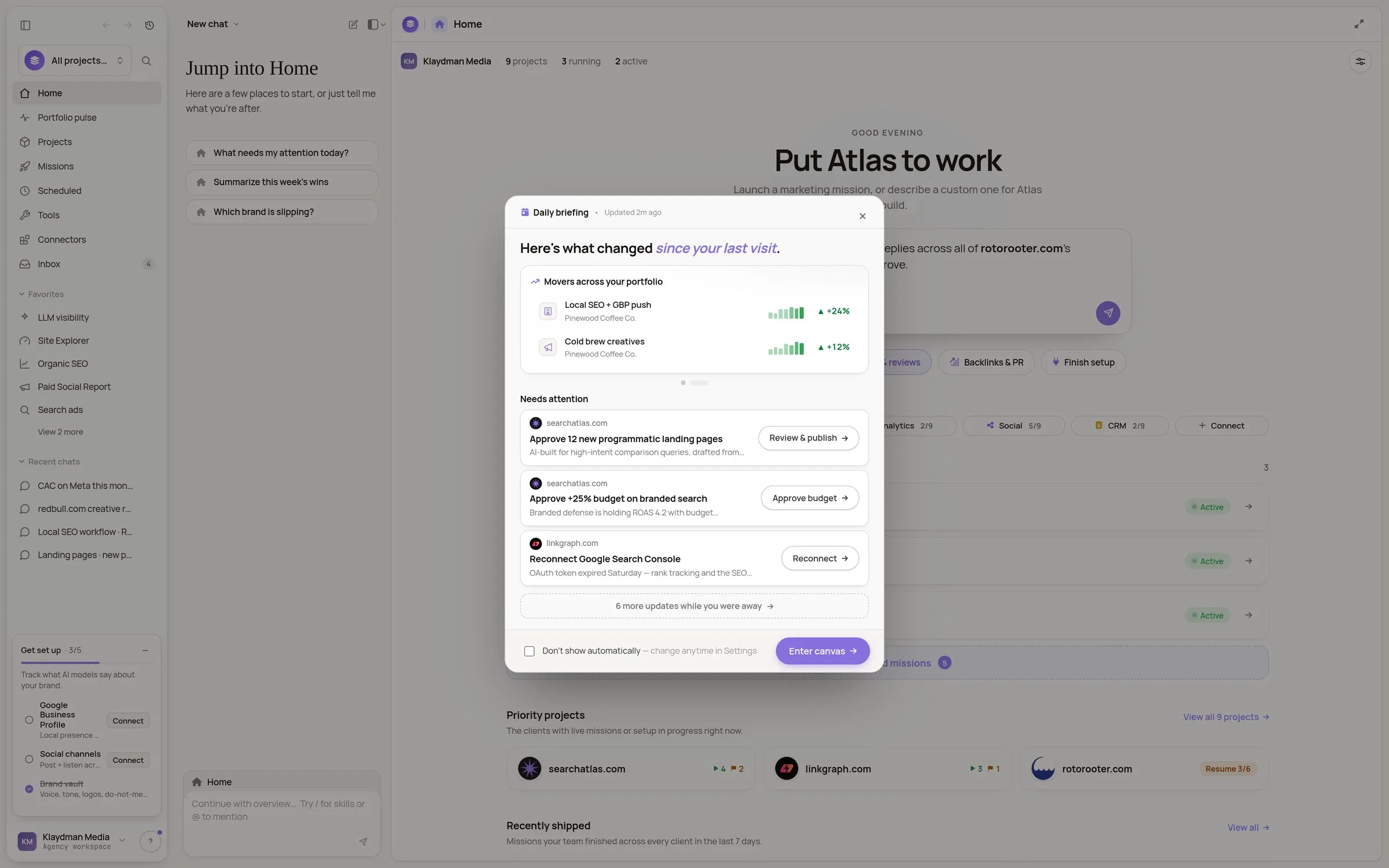
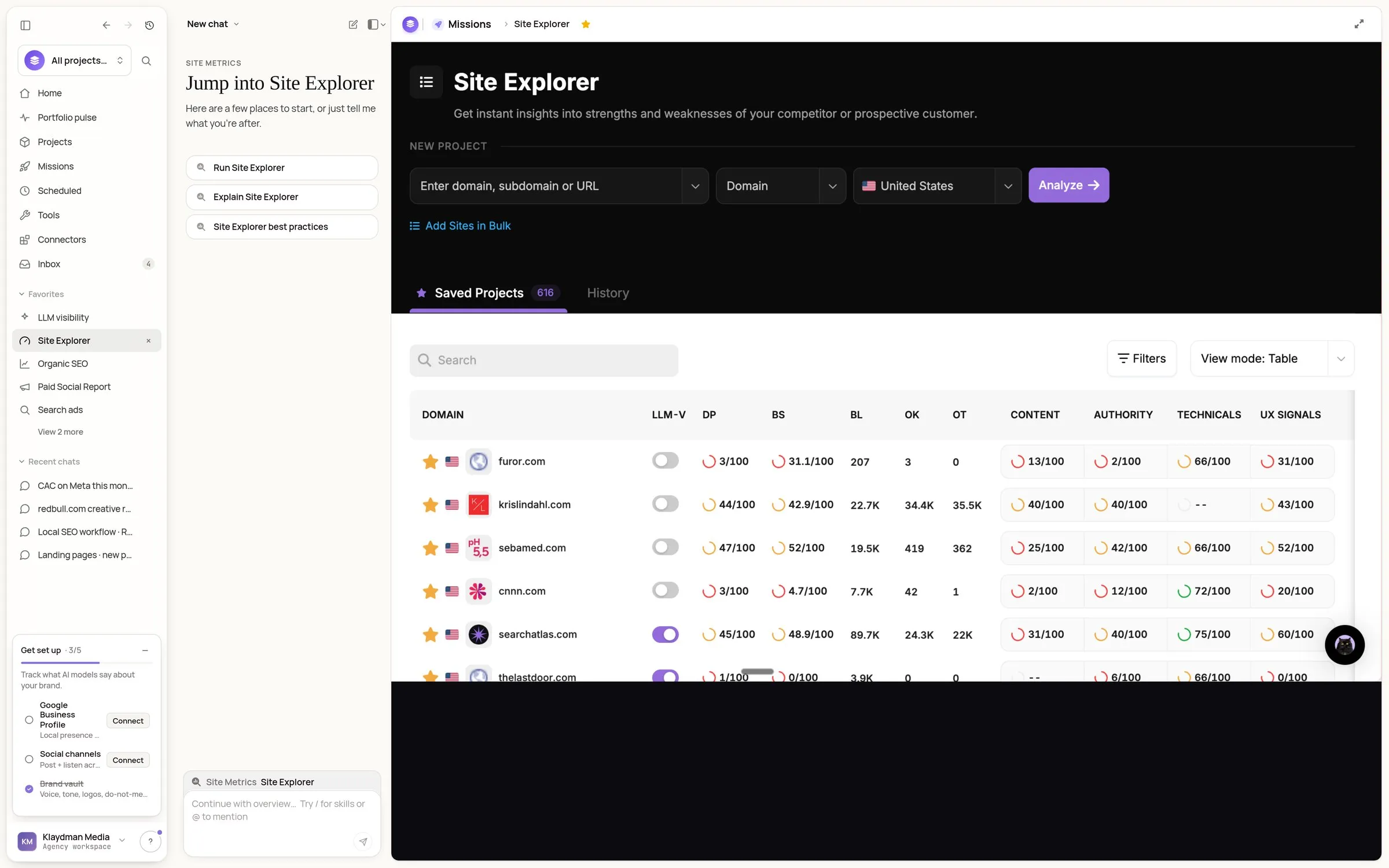
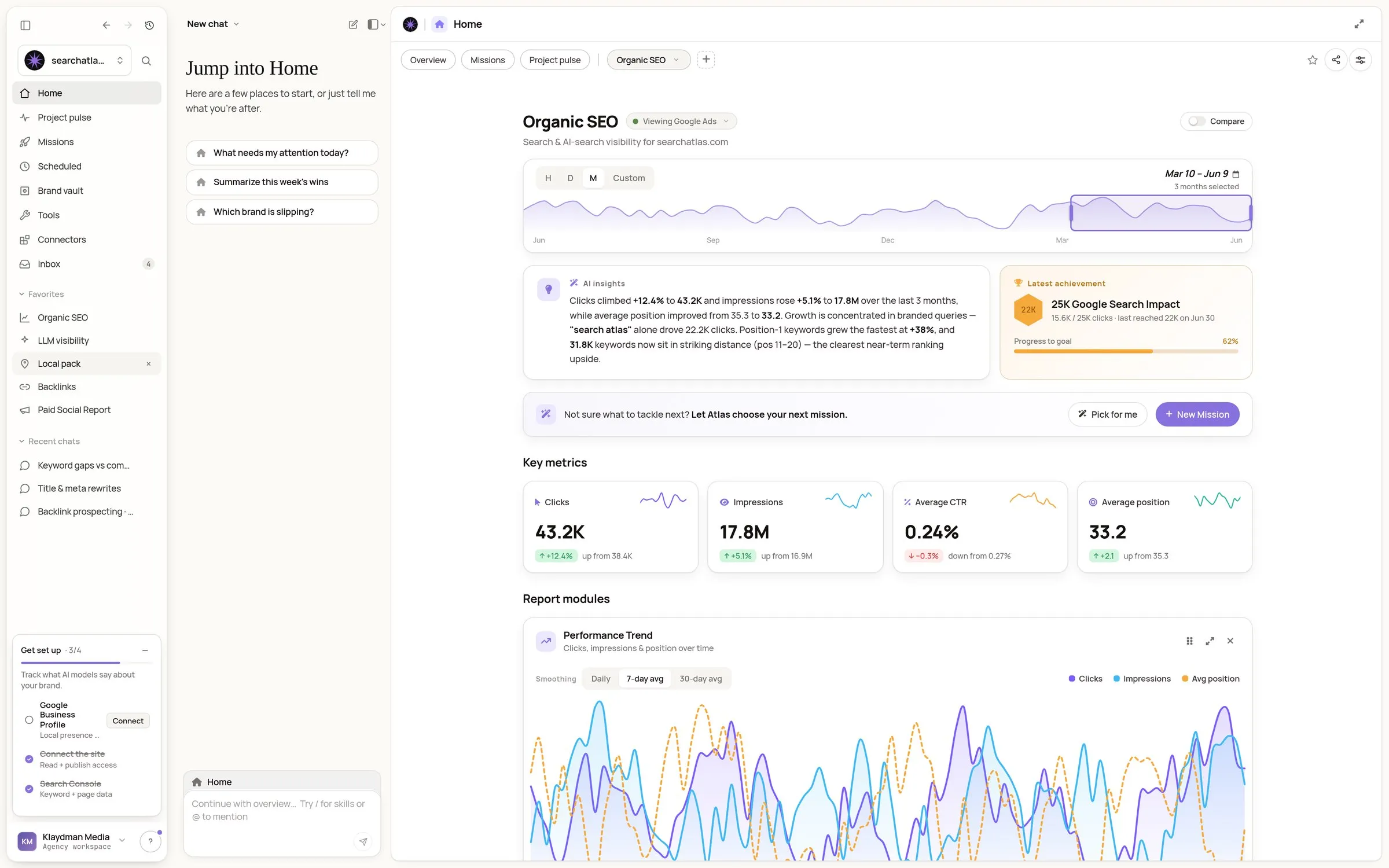
A working, clickable application. It runs in any modern browser with nothing to install: open it, and the full redesigned platform is there to use. The client’s team evaluated the redesign by clicking through real flows with real states, not by reviewing screens.
Coverage, as working software:
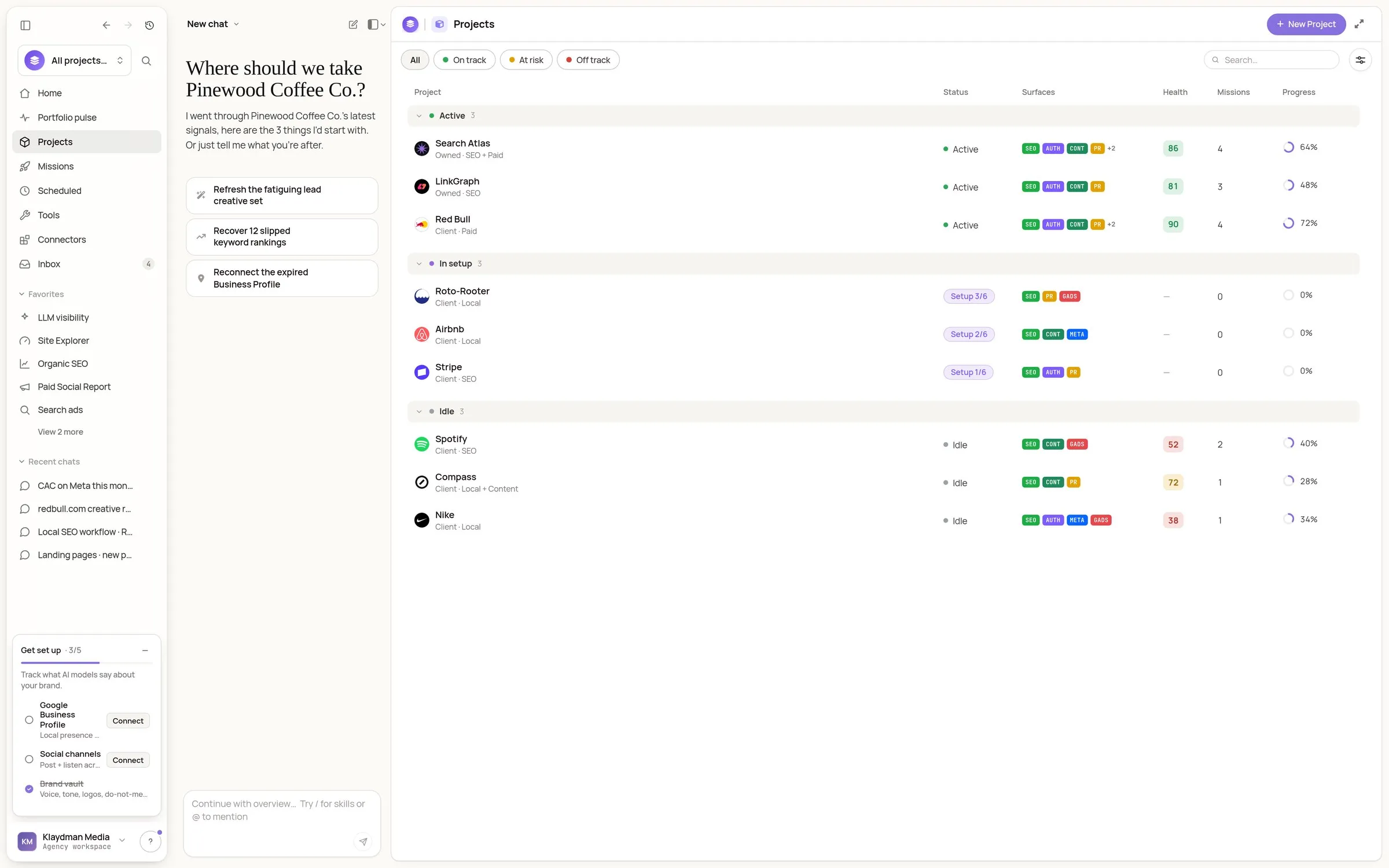
- Onboarding, the full first-run experience
- Project creation
- Campaign tracking
- Campaign execution
- Live configuration, settings changed in place with the UI responding
Every state is real. Loading, empty, error, hover, and transitions are implemented, not implied. The build is component-based under the hood and holds a production-track visual bar for typography, spacing, hierarchy and motion.
Two products in one build
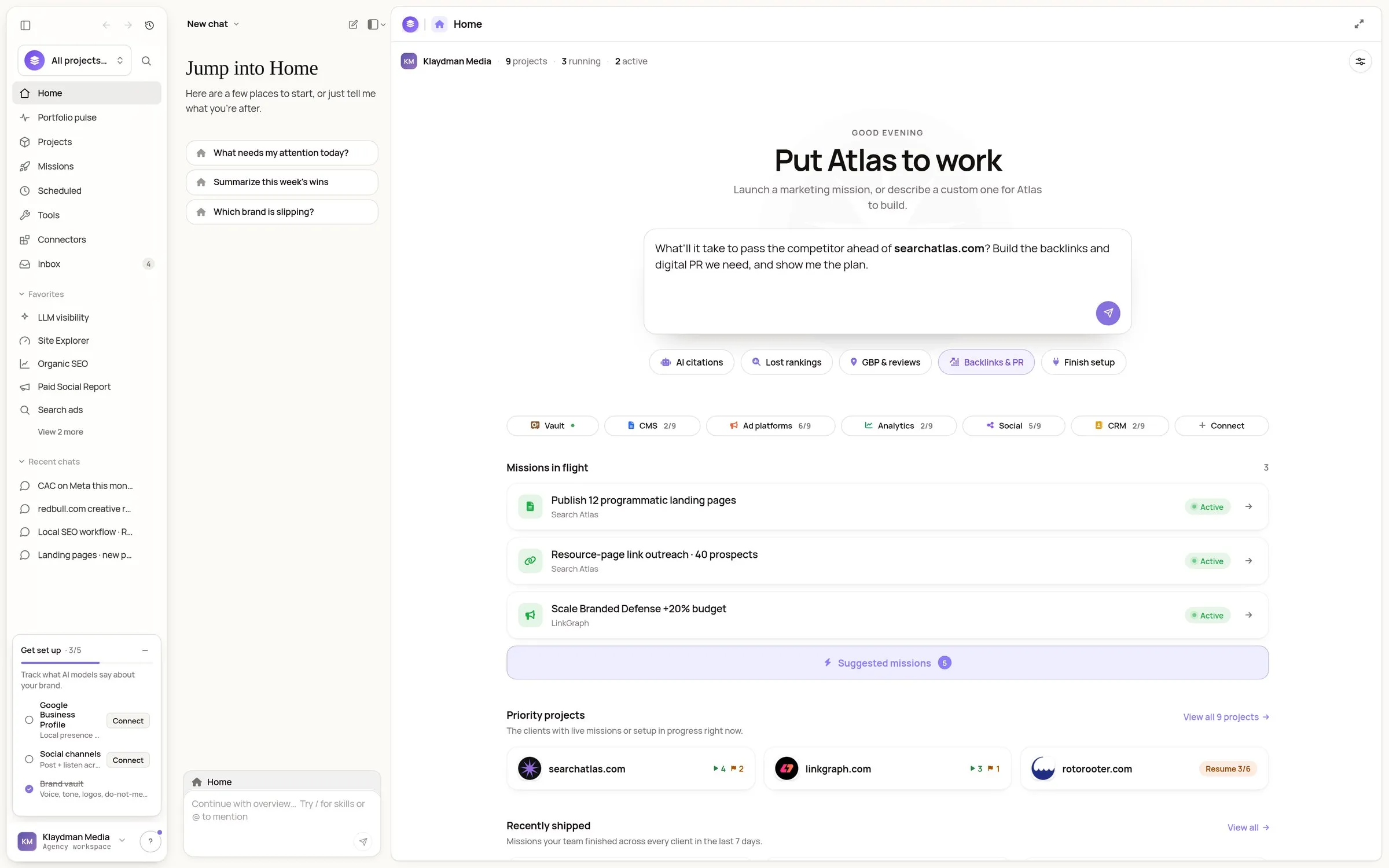
The deliverable contains two complete versions. Classic is the redesigned platform in its familiar shape. Agent Hub is the bolder step: a canvas-first workspace where users describe what they need in plain language and an agent named Atlas plans and runs missions across the platform, tracking how brands appear in answers from ChatGPT, Claude, Gemini and Perplexity alongside classic search.
How one person shipped this in a month
The build ran on agentic AI tools, primarily Claude Code, with the working method I use on every engagement. Clarify the problem in conversation with the model first. Build one small flow at a time, not the whole thing from one giant prompt. Refine by hand. Then return to system level for a consistency pass.
The piece that made it hold together across dozens of sessions is a project context file: design tokens, component patterns, product voice, and interaction rules in one document that every session loads and obeys. Without it, agentic output drifts into dialects. With it, thirty sessions read as one product. The build even ships a runtime theming layer, with light and dark tone presets, density modes, and motion settings that respect reduced-motion preferences, all driven by that token system.
What changed for the client
The conversation shifted. Feedback stopped being “do we like these screens” and became “this flow feels slow on the third step”. That is a fundamentally better conversation, and it is only available when there is something real to click.
To keep the story straight: this is a working prototype of a redesign at production-track quality, built to be evaluated and to guide the rebuild. It is not the shipped Search Atlas product, and it runs on representative data.